Safety matters. It helps us rest, recover, and feel steady enough to live our lives. But there’s a quiet moment many of us recognize—when the very things meant to protect us start to limit us instead. What once felt supportive begins to feel tight, repetitive, or oddly draining, even though nothing looks “wrong” from the outside.
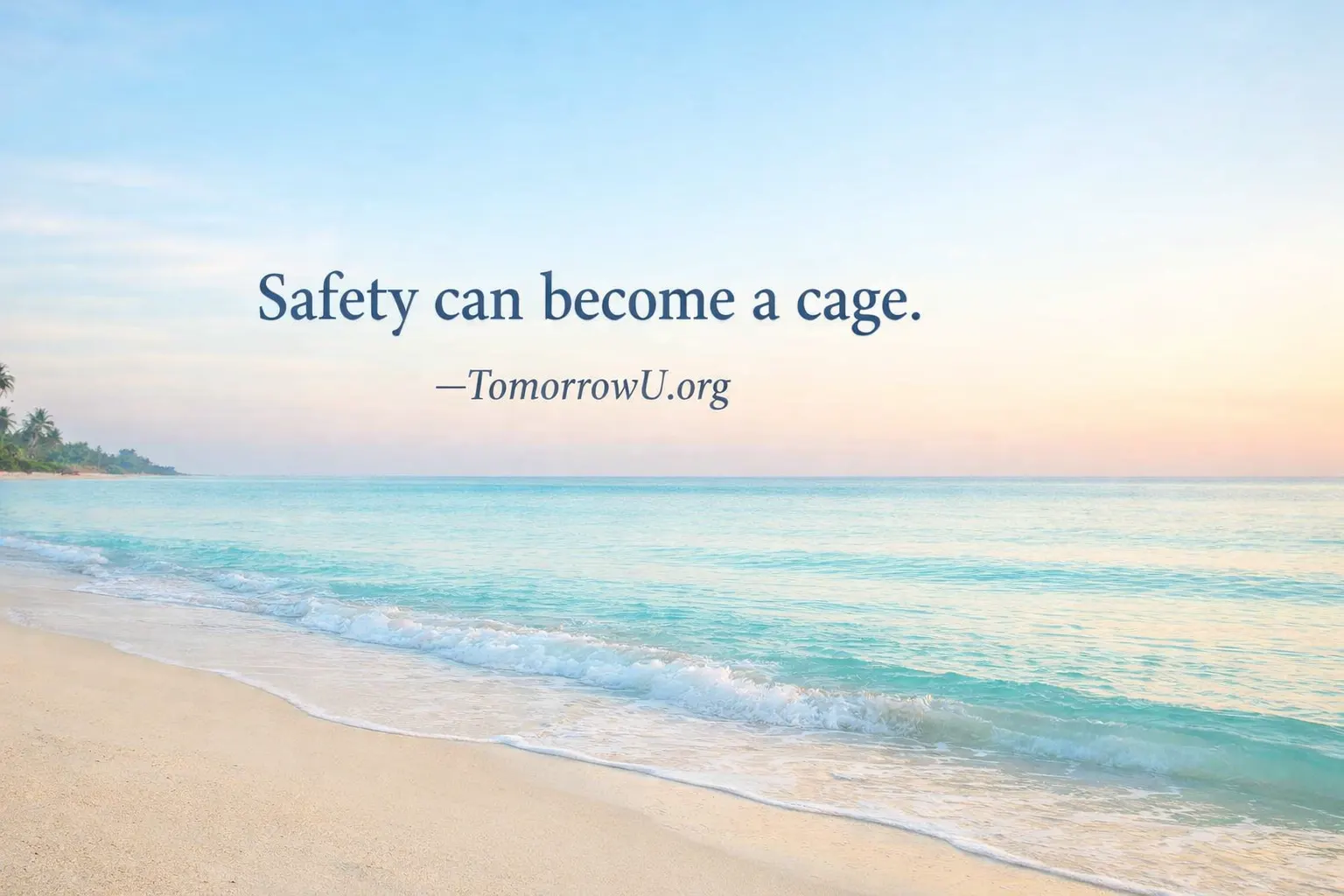
Safety can become a cage. —TomorrowU.org
On a personal level, this often shows up in small, familiar ways. We stick to routines that no longer fit because they feel predictable. We avoid conversations, changes, or risks—not because they’re dangerous, but because they’re uncertain. Over time, life can start to feel managed instead of lived, like we’re checking boxes rather than responding to what actually matters to us.
Zooming out, this pattern appears in families, workplaces, and cultures too. Systems built only to minimize risk can unintentionally squeeze out creativity, humor, flexibility, and growth. When everything is optimized for control, there’s less room for spontaneity or human nuance. The result may look stable on the surface, yet feel strangely flat underneath.
The gentle wisdom here isn’t about rejecting safety—it’s about remembering its role. Safety works best when it supports aliveness, not when it replaces it. Sometimes the most caring thing we can do is notice where we’ve confused protection with restriction, and allow a little more movement, curiosity, or breath back into our days.
Wellness Wrap-Up
True well-being isn’t found in constant control, nor in reckless change. It lives in the balance—where safety provides a foundation, and life still gets to move, stretch, and surprise us. That balance is personal, evolving, and worth revisiting often…always striving for tomorrow’s better YOU!