Forgiveness often gets tangled up with ideas of approval, reconciliation, or moral high ground. But at its core, it’s something quieter and far more personal—a choice to loosen the grip of what still hurts.
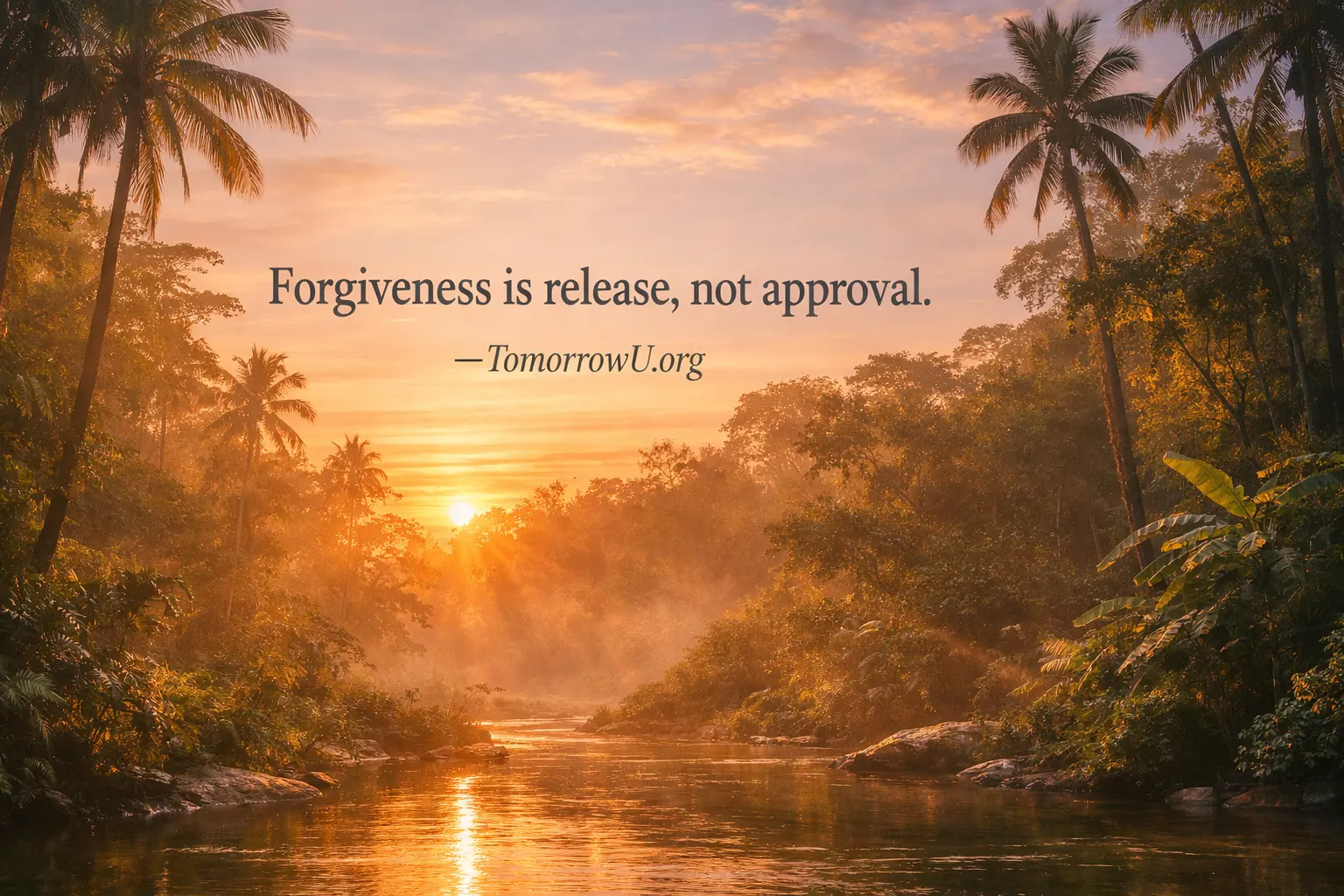
Forgiveness is release, not approval —TomorrowU.org
Most of us carry moments we wish had gone differently. A sharp word. A broken trust. An ending without closure. Forgiveness doesn’t ask you to rewrite the story or pretend it was okay. It simply offers a way to stop carrying the weight of it everywhere you go. In that sense, forgiveness is less about the other person and more about how much space the past is allowed to take up inside you.
On a broader level, this reframing matters because many people delay forgiveness, thinking it requires agreement or permission. That misunderstanding can keep pain active long after the moment has passed. When forgiveness is seen as release, it becomes an act of agency. It says, this no longer gets to shape my mood, my choices, or my sense of self. It’s not forgetting. It’s not excusing. It’s choosing not to stay stuck.
There’s a gentle wisdom in remembering that you don’t owe forgiveness to anyone—but you might offer it to yourself. Not as a favor, but as a form of freedom. Letting go doesn’t erase what happened; it simply means you stop paying interest on it. And that shift, over time, can open up room for calmer thoughts, steadier emotions, and more presence in the life you’re living now.
Wellness Wrap-Up
Forgiveness doesn’t have to be dramatic or public to be meaningful. Sometimes it’s a quiet decision to set something down and keep walking—lighter, clearer, and more at ease. That kind of release supports emotional well-being, personal growth, and the space to move forward…always striving for tomorrow’s better YOU!