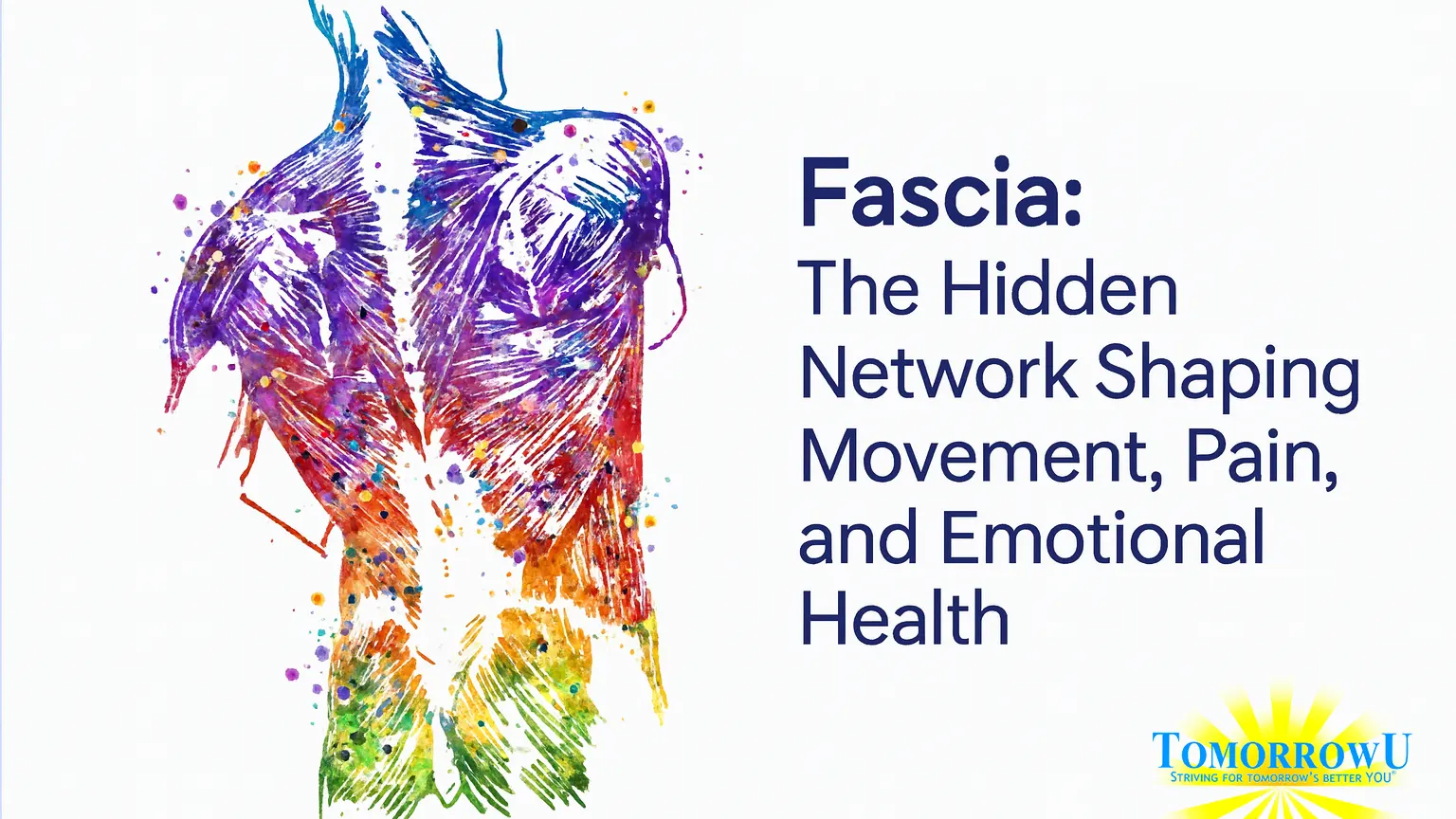
What the Fascia Connective System Really Is
Fascia is the body’s quiet architecture — a three-dimensional, fluid-sustained web of connective tissue that wraps, links, and communicates with every structure beneath your skin. It envelops muscles, bones, blood vessels, nerves, and organs in one unbroken network. Early anatomy treated fascia as structural packing material. Today, emerging research recognizes it as a dynamic sensory system essential for movement, posture, internal awareness, and emotional balance.
This network is made of collagen for tensile strength, elastin for resilience, and a water-rich extracellular matrix that allows layers to glide. Healthy fascia is supple and responsive — helping forces transfer efficiently across the body as you sit, reach, twist, walk, breathe, and stretch. When hydrated and mobile, fascia supports fluid movement, stable posture, and a sense of ease in your body. When it becomes dehydrated or restricted, its ability to glide diminishes. Stiffness, limited range of motion, compensatory movement patterns, and chronic discomfort often follow.
Fascia’s influence extends far beyond mechanics. It has one of the richest sensory nerve supplies in the body, including receptors for pressure, stretch, vibration, and internal state. In this way, fascia is not purely structural — it is a communication highway linking body and brain, shaping how we feel and how we move through the world.
How Fascia Shapes Posture, Mobility, and Tension
Your posture is not determined by bones alone; it emerges from the tension and tone of fascia surrounding muscles and joints. When fascia slides freely, your body organizes itself with balance and economy. Movements feel coordinated, grounded, and efficient.
But when fascia becomes rigid or sticky, the picture changes. Restricted fascia can pull the body out of alignment, compress joints, and limit normal ranges of motion. Over time, these restrictions alter how the body distributes load. Muscles compensate, small imbalances amplify, and tension patterns reinforce themselves.
People often describe this experience as “tightness I can’t stretch away.” That feeling reflects fascia’s role in limiting or permitting movement. Restricted fascia behaves like a stiffened sail — wherever it tightens, the body must work around it.
Fascial restriction is common in areas subject to stress or repetitive movement: the neck, shoulders, lower back, hips, and feet. Long hours of sitting contribute significantly, as do habitual postures and repetitive motions. Even after an injury heals, fascial adhesions may persist and continue to influence movement patterns long after the tissue appears “recovered.”
When mobility is limited, people sometimes assume their muscles are “weak” or “tight.” But fascia may be the deeper influence — shaping how easily the body glides, twists, and supports itself every day.
Fascia and Emotional Well-being: A Subtle Mind-Body Bridge
Fascia’s dense sensory innervation means it participates directly in emotional processing. Many of the receptors embedded in fascia transmit interoceptive information — signals about internal tension, pressure, breath, and embodied feeling. These signals help shape our sense of safety, stress, or calm.
This means fascial restriction isn’t only mechanical. Emotional experiences can influence fascial tone, and fascial tone can influence emotional experience. Chronic stress often appears in the body as tightened shoulders, restricted breathing, or a contracted chest. Over time, these patterns can densify fascia, reducing its ability to glide and respond. The body and emotions become intertwined, each affecting the other.
Many people notice that when fascia releases — through gentle movement, slow stretching, mindful breathing, or soft pressure — they feel not only physical relief but emotional softening. This is not accidental. Mechanical input to fascia can modulate the nervous system through deep-pressure pathways, shifting the body toward a calmer, parasympathetic state. Some experience moments of unexpected emotion during fascial release, as if long-held tension finally has room to move.
In this way, fascia becomes a bridge between lived experience and embodied feeling. Tending to it becomes a practice of listening inward, easing contraction, and creating space for breath and presence.
“When fascia softens, the body expands into space again — movement feels possible, breath returns, and emotion finds room to settle.”
What Disrupts Fascia’s Natural Glide
Fascia thrives on movement and hydration. When either is lacking, its structure and behavior shift in ways that affect both comfort and mobility. Some of the most common disruptors include:
Long periods of sitting
Static posture reduces hydration and nutrient flow through fascial layers. Over time, the tissue stiffens, making movement feel effortful the moment you stand or stretch.
Repetitive patterns
Typing, driving, lifting, or moving repeatedly in a limited range can create specific tension patterns. Fascia adapts to what you do most — and what you don’t do at all.
Injury or inflammation
After trauma, fascia may thicken or form adhesions as part of the healing process. Even when the primary injury resolves, these patterns may persist until consciously addressed.
Chronic stress
Emotional holding often becomes physical holding. Fascia subtly contracts, especially around the diaphragm, neck, and shoulders. Over time, this shapes posture and internal sensation.
Dehydration
Fascia relies on fluid-rich gel (hyaluronan) to allow layers to slide. Without hydration, this gel thickens, making tissue feel sticky or resistant.
These influences accumulate. Fascia remembers patterns — but with gentle, consistent care, it can also unlearn them.
Supporting Fascia Through Hydration, Movement, and Somatic Awareness
The most effective fascia care is gentle, consistent, and rooted in daily choices. You don’t need forceful stretching or intense routines. What fascia responds to best is slow, varied, mindful movement and steady hydration.
Hydration
Because fascia is rich in fluid, drinking water throughout the day supports its viscosity and glide. Think less in terms of quantity and more in terms of consistency — regular sips, mineral-rich fluids, and whole foods that support tissue integrity.
Varied Movement
Fascia adapts to motion. It thrives when the body moves through gentle twists, arcs, bends, and spirals. Practices such as walking, slow yoga, tai chi, dancing, or mobility flows encourage fascia to hydrate, lengthen, and reorganize. The goal is not intensity but range and curiosity.
Breath as a Fascial Movement
Breathing isn’t only respiratory — it’s mechanical. Each inhale and exhale moves fascia in the torso, abdomen, and spine. Slow, deep, diaphragmatic breaths help soften tension around the diaphragm and ribs, areas where emotional stress often collects.
Somatic Awareness
Awareness reconnects you with the sensations of your body. When you notice where you brace, clench, or collapse, you can respond with softer movement or breath. This awareness is not analysis — it is listening. Over time, it gently unwinds habitual patterns.
Gentle Manual Support
Self-massage, soft pressure, foam rolling, or hands-on support from a practitioner can encourage fascial glide. The key is slowness. Quick pressure skips over the deeper layers where change happens. Slow, sustained contact gives the tissue time to respond.
These practices create a dialogue with your fascia — one built on patience, presence, and trust.
“Treat your fascia gently and consistently, and it will reshape your posture, ease your breath, and soften the ways your body holds your history.”
Daily Micro-Practices for Fascial Ease
Small practices done regularly often outperform bigger routines done occasionally. These micro-practices help your fascia stay hydrated, responsive, and supple:
Morning wake-up
Before getting out of bed, make slow arcs with your ankles, gentle circles with your wrists, and a soft full-body stretch. This takes seconds and wakes the fascial network gradually.
Posture resets
Every hour, take a moment to lengthen your spine, relax your shoulders, unclench your jaw, and allow breath to deepen. These small shifts keep fascia from stiffening during long periods of stillness.
Gentle mobility
Five minutes of spiraling movements — hip circles, shoulder rolls, side bends, soft twisting — nourish the fascial layers that support your joints.
Hydration rhythm
Keep a water bottle nearby and sip regularly. Fascia responds better to steady hydration than occasional large amounts.
Evening unwinding
Spend a few minutes lying on your back with knees bent, letting your spine settle. Notice where your body melts into the floor. This simple practice signals to fascia — and your nervous system — that the day is softening.
Shared softening
If you live with someone, invite them into a quiet unwinding moment — a shared stretch, mirrored breath, or simple side-by-side pause. Collective calm often begins with one person softening first, offering safety without words.
Progress happens in gentle layers. You may begin with hydration and awareness, then add subtle mobility, then pair breath with posture resets, and eventually share these moments with others. Small practices, thoughtfully layered, create a more easeful rhythm for both body and relationships.
When Fascia Becomes Stuck: The Aftermath of Stress, Injury, and Overuse
When fascia loses its fluidity, the effects ripple across the body in ways that may not immediately appear connected. Tightness in the hips may influence the lower back. Restricted movement in the ribcage may affect the neck or diaphragm. Chronic emotional stress may manifest as a protective posture — rounded shoulders, shallow breathing, a subtly guarded stance.
In chronic low back pain, for example, densified or adhered fascia often plays a significant role. Research exploring fascia-directed approaches shows improvements in mobility, pain levels, and overall function. These findings reflect what many people intuitively experience: when the underlying tissues regain their glide and resilience, movement becomes less guarded and pain gradually decreases.
Similarly, deep pressure applied slowly to tense fascial areas often triggers sensory and emotional shifts. People describe feeling calmer, softer, or unexpectedly moved. This is the body’s natural response to surrounded, steady contact — a signal that tension patterns may finally have enough safety to release.
Fascia carries these stories. Supporting it with patience, presence, and gentle movement helps those stories change.
Integrating Fascia Awareness Into Daily Life
Understanding fascia is not the same as feeling it. The real transformation happens when you build a relationship with your body’s internal landscape — one gentle breath, small stretch, or curious movement at a time.
There is no perfect posture. There is only the posture you repeatedly return to. There is no ideal mobility routine. There is only the willingness to move with curiosity. And there is no single moment when fascia “lets go.” Instead, there is accumulation: small choices repeated, softening patterns created through attention rather than force.
Bring awareness to how you sit, how you stand, how you breathe. Notice the moment your shoulders rise in stress, or your chest collapses in fatigue. These observations are not judgments. They are invitations.
Let movement be a conversation. Let breath be a companion. Let your fascia be something you care for the way you care for any part of yourself that carries weight, history, and possibility.
Wellness Wrap-Up
Fascia is far more than a structural layer. It is a dynamic, sensing, responsive web shaping how you move, how you carry stress, and how you experience emotional life. When nurtured through hydration, varied movement, gentle pressure, and somatic awareness, fascia becomes a supportive partner in mobility, posture, and internal ease.
Caring for fascia doesn’t require intensity — only consistency. Small, soft daily practices restore fluidity, reduce tension, improve posture, and deepen your sense of connection with your body. Over time, this creates not just physical comfort, but a more grounded emotional landscape.
Honor this hidden web. Let it glide. Let it breathe. Let it be part of how you return to yourself each day.
Striving for tomorrow’s better YOU!
References
- Bordoni, B., & Simonelli, M. (2018). The awareness of the fascial system. Cureus, 10(10), e3397. https://doi.org/10.7759/cureus.3397
- Gatt, A., Agarwal, S., & Zito, P. (2023). Anatomy, fascia layers. StatPearls. StatPearls Publishing. https://www.ncbi.nlm.nih.gov/books/NBK526038/
- Gordon, C. M., Dugan, V., Hörmann, C., & Montoya, P. (2024). Interdisciplinary fascia therapy: A proof-of-concept pilot study for a new myofascial approach for chronic low back pain. Journal of Clinical Medicine, 13(23), 7226. https://doi.org/10.3390/jcm13237226
- Kodama, Y., et al. (2023). Response to mechanical properties and physiological challenges of fascia. Bioengineering, 10(4), 474. https://doi.org/10.3390/bioengineering10040474
- Malone, D. (2025). Beyond the physical: Massage therapy for emotional health. Massage Therapy Journal, 18(2), 45–52. https://www.amtamassage.org/publications/massage-therapy-journal/massage-and-emotional-health/
- Michalak, J., Aranmolate, L., Bonn, A., Grandin, K., Schleip, R., Schmiedtke, J., Quassowsky, S., & Teismann, T. (2022). Myofascial Tissue and Depression. Cognitive therapy and research, 46(3), 560–572. https://doi.org/10.1007/s10608-021-10282-w
- Overmann, L., et al. (2024). Exploring fascial properties in chronic neck pain and depression. Acta Psychologica, 244, 104214. https://doi.org/10.1016/j.actpsy.2024.104214
- Slater, A. M., Barclay, S. J., Granfar, R. M. S., & Pratt, R. L. (2024). Fascia as a regulatory system in health and disease. Frontiers in Neurology, 15, 1458385. https://doi.org/10.3389/fneur.2024.1458385
- Zieliński, G. (2025). The future of fascia—A scoping review on emerging research trends and recommended sample sizes and effect sizes in fascia studies. International Journal of Molecular Sciences, 26(18), 8871. https://doi.org/10.3390/ijms26188871
Note: Always consult with a healthcare professional before making significant changes, especially if you have existing health conditions.