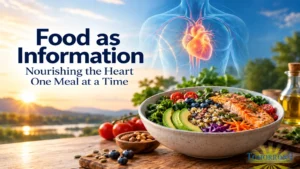
Food as Information: Nourishing the Heart One Meal at a Time
Food is so familiar that it is easy to reduce it to a few simple ideas. Calories give us energy. Protein helps build muscle. Fat gets stored. Carbohydrates become glucose.…

Refers to foods that are unprocessed or minimally processed, retaining their natural nutrients and fiber. Whole foods include fresh fruits, vegetables, nuts, seeds, whole grains, and lean proteins. Eating a diet rich in whole foods supports better digestion, sustained energy, and overall health by providing essential vitamins, minerals, and antioxidants.
Food is so familiar that it is easy to reduce it to a few simple ideas. Calories give us energy. Protein helps build muscle. Fat gets stored. Carbohydrates become glucose.…

In our modern diet, seed oils such as soybean, canola, and sunflower oil have become common, often marketed as healthier alternatives to saturated fats. However, emerging research suggests that these oils might not be as beneficial as once believed. Eliminating seed oils can lead to significant health improvements, including reduced inflammation, better cardiovascular health, and enhanced metabolic function. This article explores the benefits of cutting out seed oils and offers practical tips for making this dietary change. Discover how swapping seed oils for healthier fats, incorporating omega-3-rich foods, and focusing on whole, nutrient-dense ingredients can transform your health and well-being.